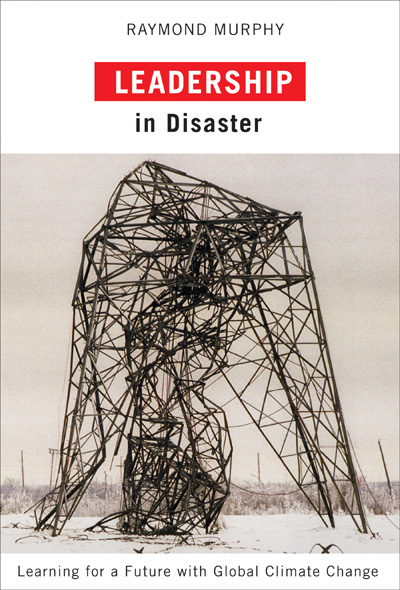
Disasters occur when hazards of nature strike socio-technological vulnerabilities. While science provides valuable indications of risk, it does not yield certainty, yet leaders must make sense of threats. Raymond Murphy's case study of the management of the 1998 ice storm - the most costly disaster ever in Canada, northern New York state, and Maine - presents rare interviews with key political and emergency management leaders that provide an insider's view of the challenge of responding to extreme weather. They document a generally well managed crisis, but also reveal the slippery slope from transparency to withholding critical information as the crisis deepened, and examine conflict resolution between leaders during a disaster.
The study looks into whether technological development inadvertently constructed new vulnerabilities to nature's forces, thereby manufacturing a natural disaster. As this extreme weather may foreshadow what will occur with global warming, Murphy's interviews also explore the politics, economics, ethics, and cultural predispositions underlying climate change, investigating how modern societies create both risks they assume are acceptable and the burden of managing them. An innovative comparison with Amish communities, where the same extreme weather had trivial consequences, is instructive for avoiding future socio-environmental calamities.
Leadership in Disaster is a major contribution to the analysis of vulnerability, resilience, and the challenge of confronting environmental problems, such as global climate change, and a valuable resource for scholars and general readers seeking to learn more about how extreme weather disasters can be managed.
Review quotes
“Dealing with unexpected disaster, be it a pandemic, ice storm, forest fire, or hurricane, is unfortunately part of the job description of any modern CEO – and Ray Murphy’s book should be required reading for anybody taking on the leadership of a large organization. It presents the story of the great Northeast ice storm of 1998 from various perspectives and paints a vivid picture of crisis decision making under emergency conditions. The lessons are all there: preparation, communication, creativity, team, optimism, decisiveness, all presented in a well-written style and thoughtful way. Crisis leadership is a real skill – and this book is the best ‘how-to’ anyone can find.”
Gov. Angus King, Governor of Maine, 1997–2003
"Interviews with key decision makers should mean this reaches a number of lay-people as well as journalists. Leadership in Disaster is beautifully written and deserving of a wide readership." Peter Dickens, University of Cambridge
Raymond Murphy is emeritus professor of sociology, University of Ottawa, president of the Environment and Society Research Committee of the International Sociological Association, and the author of numerous books, including Social Closure and Rationality and Nature.