 Login
Login Create Account
Canadian Store (CAD)
You are currently shopping in our Canadian store. For orders outside of Canada, please switch to our international store. International and US orders are billed in US dollars.



You are currently shopping in our Canadian store. For orders outside of Canada, please switch to our international store. International and US orders are billed in US dollars.

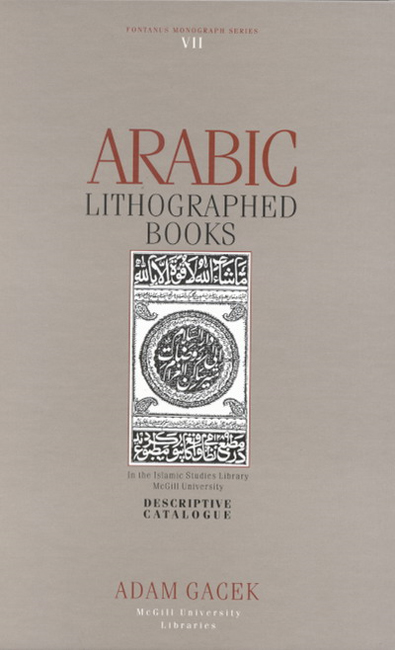 |
Arabic Lithographed BooksIn the Islamic Studies Library, McGill University |
Part of the Fontanus Monograph Series (number 7 in series)
280 Pages, 6 x 9
McGill University Libraries
ISBN 9780773514515
June 1996
Formats: Cloth




McGill-Queen’s University Press in Montreal is on land which long served as a site of meeting and exchange amongst Indigenous Peoples, including the Haudenosaunee and Anishinabeg nations.


